Image
Sarah Fong is a neuroscience and public policy major in the class of 2028 and a featured guest blogger. Sarah was a student in our human rights seminar course, Memory Bandits, in fall 2025. This seminar introduced students to multiple approaches to why and how to create memory, with a focus on contributing to a project underway at Catawba Trail Farm. Several students will be featured guest bloggers on the Duke Human Rights Blog this month as part of our Student Stories: Memory Bandits Series.
Since moving to West Campus, I’ve felt a certain pride in telling people that I live in Craven Quad. It’s newly renovated and conveniently located.
But then I learned that Braxton Craven, a former president of the university, had previously enslaved people, including children. Now, I see the Craven crest in a different light. This helped open my eyes to stories hidden beneath the legacies of the leaders we’re taught to honor and admire.
Verne Harris describes a memory bandit as someone who uses archives to promote justice. Memory bandits bridge the almost childish wonder and inquisitive spirit about the world with a determination to seek justice and tell hard stories.
As a memory bandit, I worked on learning and researching the people who lived at the Snow Hill Plantation, which was once a part of North Carolina’s largest plantation known as Stagville. In 2018, sisters Delphine Sellars and Lucille Patterson undertook the restoration of this historic farmstead, developing it into Catawba Trail Farm and Community Garden. In addition to conducting oral histories, I’ve had the opportunity to explore and learn through visiting Horton Grove and Stagville.
Delphine Sellars is the Executive Director of UCAN, the non-profit that operates Catawba Trail Farm. She leads UCAN by taking on history and land that was previously used to enslave families and transforming it into a memorial site that restores voice and dignity, to their descendants through community gardens and education programs. Sellars describes her experience, “I look back on the old me and how young and foolish I was, that I let time and people slip away from me… that history that you want to know, you can’t answer any questions about it…because once people are gone, they're gone, and all that, all I wish I could, and I wish I had, serves no purpose.” It is, therefore, more important than ever to seek out and illuminate these histories before it is too late.
My project focuses on the stories of the people who previously harvested tobacco on the plantation, a catalyst behind
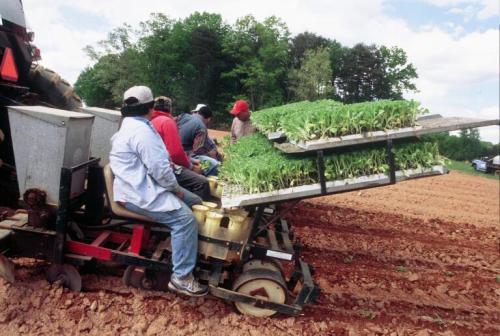
Durham’s wealth. I wanted to know about the role played by Latino farmworkers who now harvest tobacco in the state. North Carolina relies heavily on the labor force made up of largely immigrant workers to sustain the tobacco industry. In times when the tobacco sector is being tremendously impacted by tariffs and global trade wars, these workers, many undocumented, are more vulnerable to exploitation, dangerous working conditions, and barriers to healthcare than ever before.
I received the opportunity to speak with Johnny Smith, operational and technical manager at Duke’s Franklin Humanities Institute in Smith Warehouse (the building was once the largest warehouse used by the Duke family when they owned American Tobacco). As a fifth grader, Smith harvested tobacco fields in Rockingham, south of Durham. He earned about 75 cents an hour. He described the strenuous process of tobacco farming, along with the challenges of dealing with the weather, gum from the tobacco plant, and snakes in the field.
Smith says it’s the hardest job he’s ever done. He credits his work ethic and self-sufficiency to that experience. For him, “history is kind of repeating itself, from when I was a kid to some of the undocumented people who are going through some of the same things I went through then, but their plight is worse because they don't have citizenship.”
Mr. Smith is right. If we do not learn history, the inequalities and cycles of prejudice we see today will only persist. But it is not enough to just learn history – we must question it, identify the unidimensional perspectives that uphold harmful narratives, and upend them. Throughout this class, I’ve learned that, even as students and non-historians, we do not have to passively accept the histories handed to us. Instead, it is our collective responsibility to seek out diverse forms of knowledge and recover the stories that have long been neglected before they vanish forever.